Common Sense Economics
Is the Economy Working For You
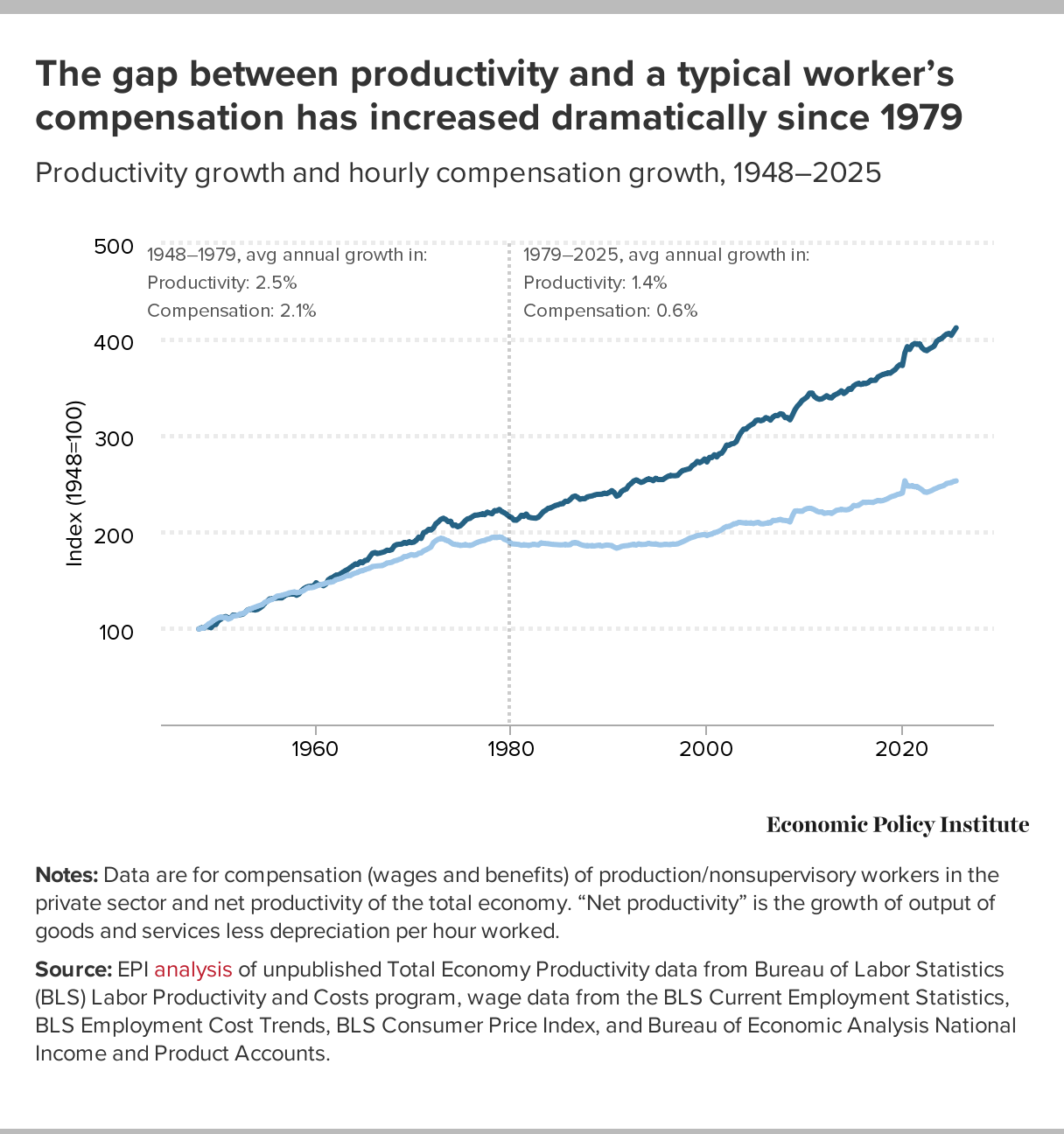
For 31 years, wages (light blue) and productivity (dark blue) rose together—both doubled between 1948 and 1979. Most working people shared in the gains, although we know those gains weren’t shared equally.
As the chart on the left shows, from 1979 on, productivity continued to rise, but employers refused to pay higher wages. Where we used to grow together, now we grow apart.
What happened?
Corporations and the 1% rigged the rules of the economy to keep wages low and make it harder for working people to make a living, while they generously compensated themselves. Now, the average CEO makes 272 times the typical worker!
Unions improve wages and benefits for all workers, not just union members. They help reduce income inequality by making sure all Americans, and not just the wealthy elite, share in the benefits of their labor.
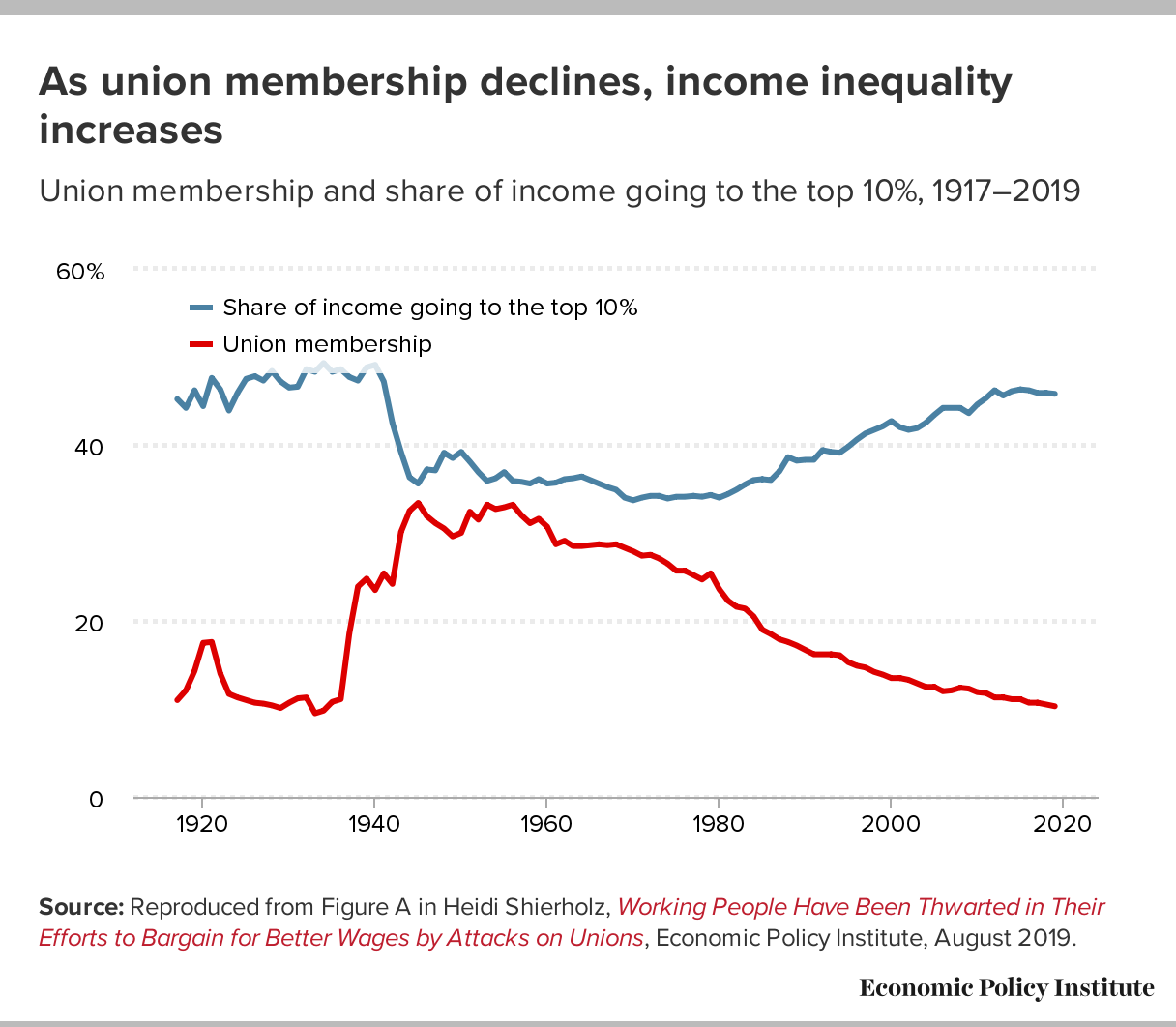
By bringing workers’ collective power to the bargaining table, unions are able to win better wages and benefits for working people—reducing income inequality as a result. As we see here, there was less income inequality in the decades following World War II than there is today.
Not coincidentally, union membership was at its highest rate in 1945, just as the war was ending. But as union strength steadily declined—particularly after 1979—income inequality got worse, and it is now at its worst point since the Great Depression.
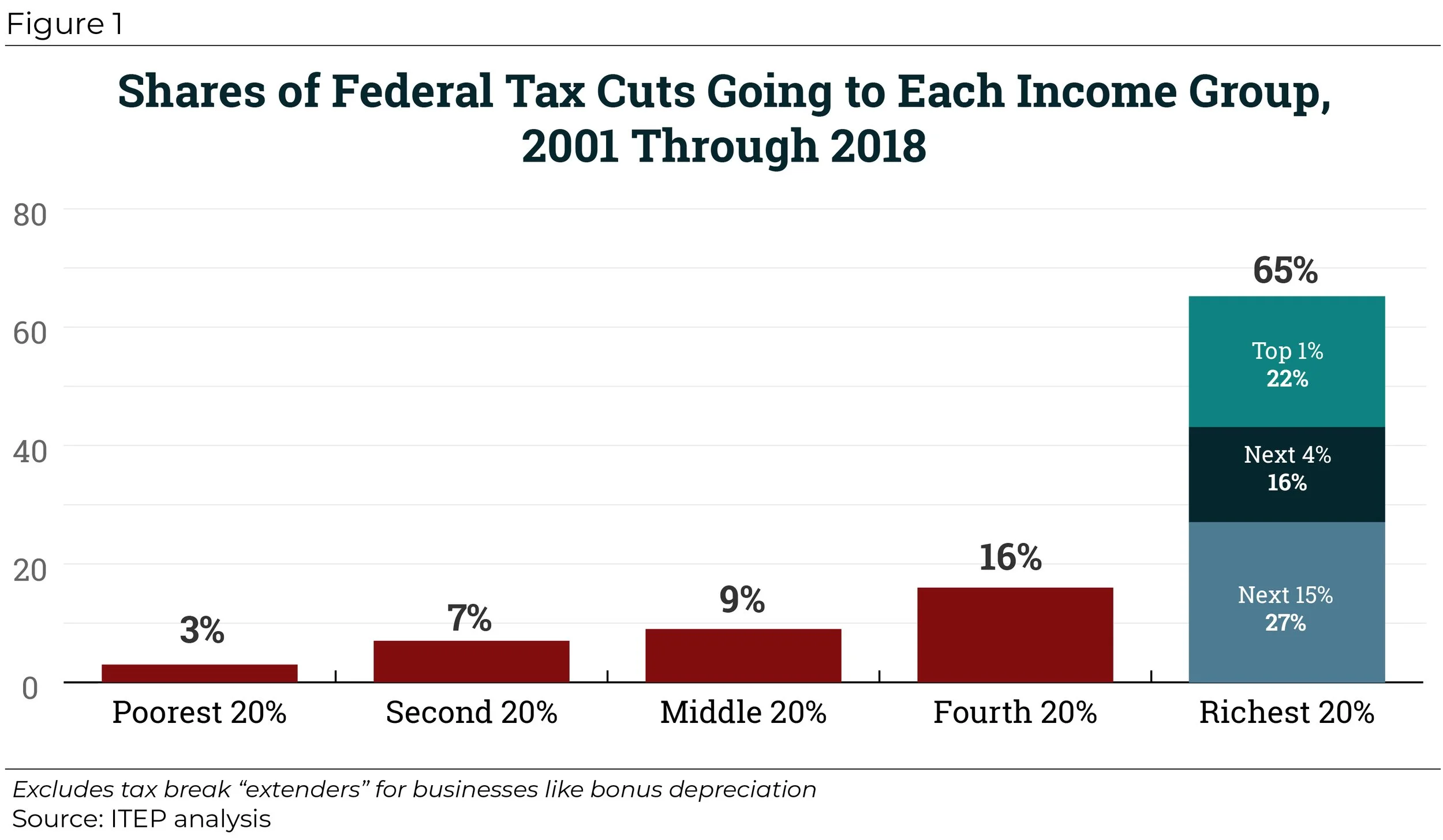
Since 2000, tax cuts have reduced federal revenue by trillions of dollars and disproportionately benefited the richest of the rich. From 2001 through 2018, significant federal tax changes, driven by corporations and the billionaire class, established tax breaks to the tune of $5.1 trillion, with nearly two-thirds of that flowing to the richest 20% of Americans.
By the end of 2025, the total amount of tax cuts will reach $10.6 trillion. Nearly $2 trillion of this amount will have gone to the richest 1%.
Does that sound like an economy that puts working families first?
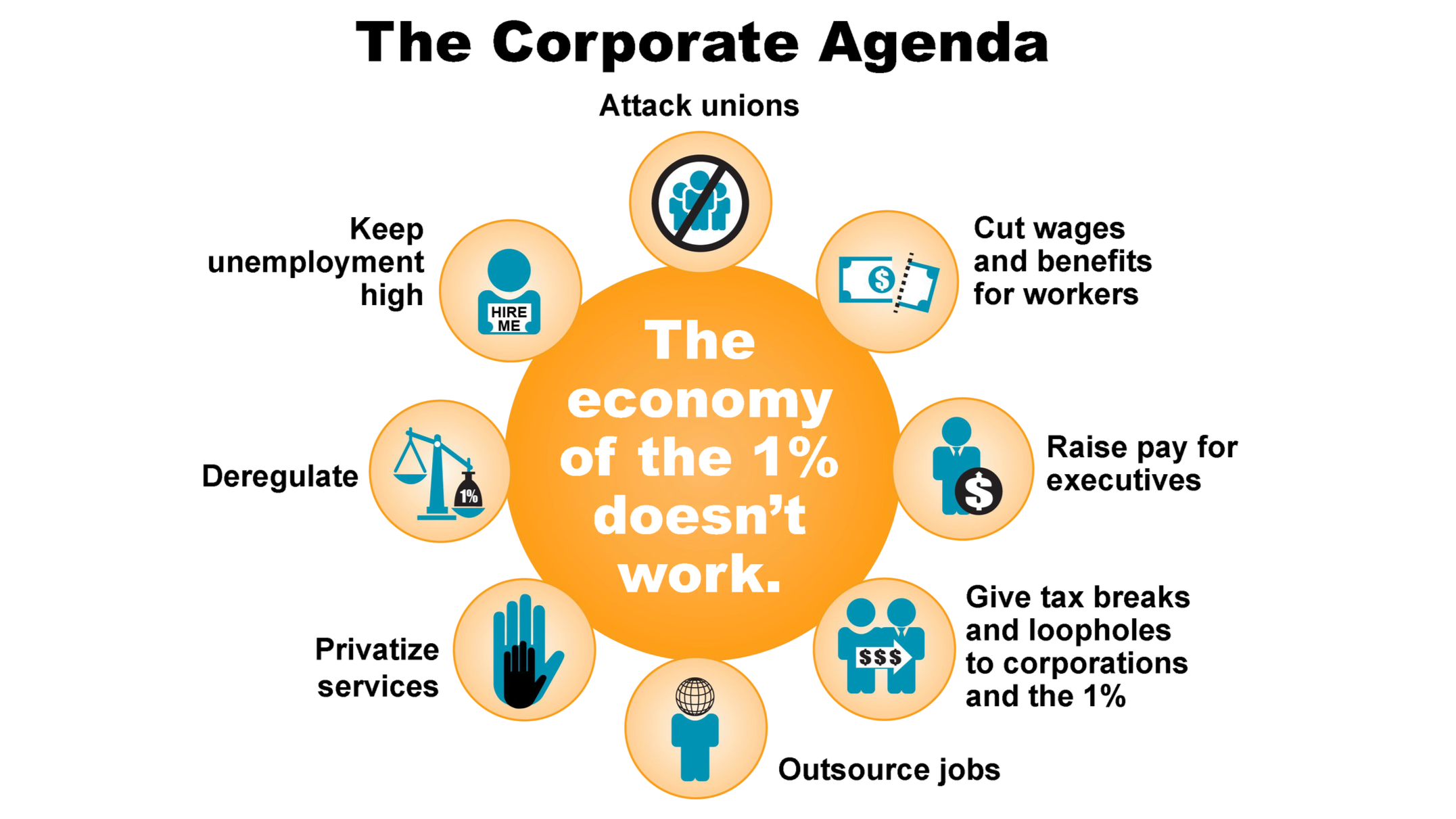
How do corporations and the billionaire class rewrite the rules of the economy to enrich themselves? Well…
ATTACK UNIONS: Corporations try to take away our freedom to negotiate a fair return on our work together by attacking unions in the workplace, trying to pass “right to work” laws, requiring periodic recertifications, and prohibiting the use of public resources for dues collection, among other things.
CUT WAGES AND BENEFITS: Corporations try to take away our freedom to care for our families by cutting wages and benefits, opposing minimum wage increases, Misclassifying workers, weakening overtime rules, and attacking project labor agreements and prevailing wage rules.
RAISE PAY FOR EXECUTIVES: CEOs and highly paid executives should not have more freedom for good-paying jobs than working people.
TAX BREAKS: They push to cut corporate tax rates and create new tax loopholes that leave low- and middle-income working people paying more than our fair share of taxes. When this happens, our communities become underfunded.
OUTSOURCE JOBS: Corporations offshore jobs to other countries in search of the lowest wages and least protections for workers and the environment. They push for trade agreements, like NAFTA, that allow them to freely move out of the United States without facing any penalty.
PRIVATIZE SERVICES: They privatize government services so they can make a profit from services the government should provide and destroy public-sector unions along the way.
DEREGULATE: Corporations push for deregulation, and routinely ignore the laws and regulations that protect workers and consumers.
KEEP UNEMPLOYMENT HIGH: They keep unemployment high so workers are more desperate and less likely to fight against low wages and bad working conditions.
The corporate agenda drives neoliberalism to take away our freedoms. Let’s look more closely at who is driving the corporate agenda and how